
Introduction
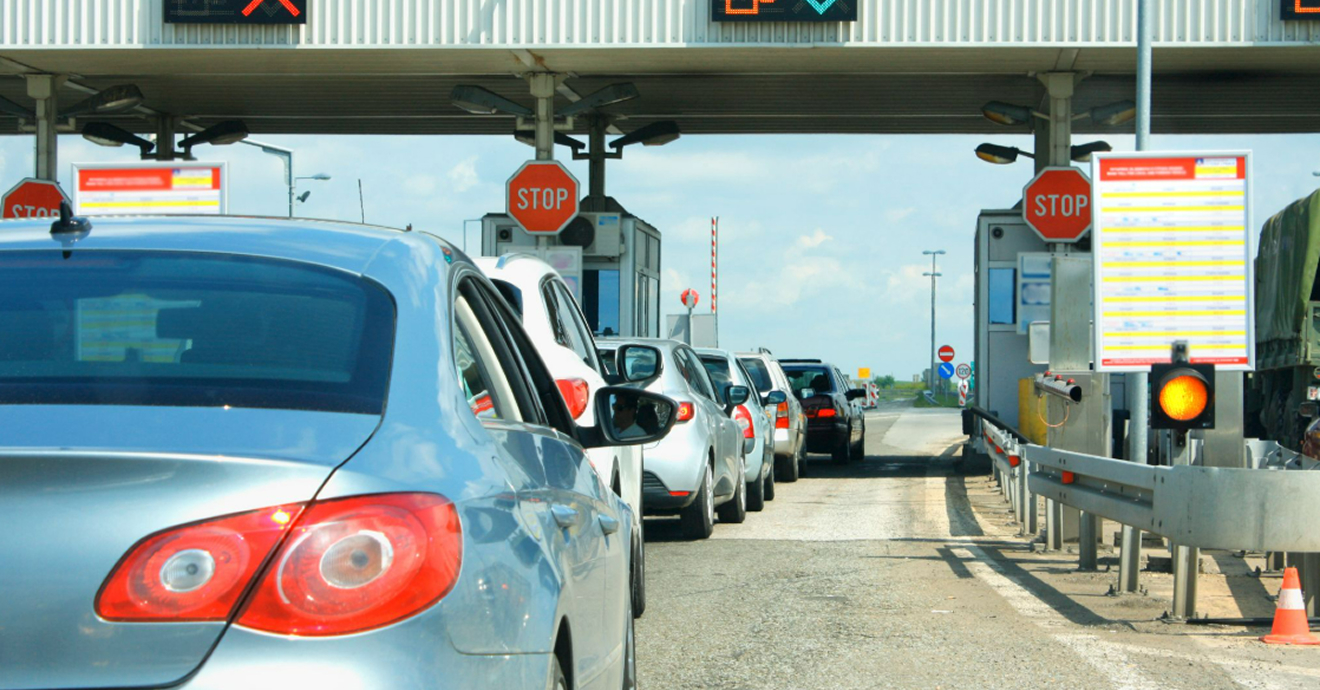
Every time a vehicle enters a car park, passes a toll plaza, or approaches a gated facility and the barrier opens automatically, there’s a good chance an ANPR system is working behind the scenes. The technology is so embedded in everyday infrastructure that many people use it without even realising it.
Automatic Number Plate Recognition (ANPR) is widely used in Malaysia for parking management, toll collection, access control, and security. This guide covers what ANPR is, how it works, where it is used, and what businesses should consider when choosing a system.
What Is an ANPR System?
Automatic Number Plate Recognition (ANPR) is a technology that uses specialised cameras and software to automatically capture, read, and process vehicle number plates in real time, without human intervention.
The system converts a plate image into machine-readable text and cross-references it against a database to trigger an appropriate action, whether that is opening a barrier, flagging a vehicle, logging an entry, or generating a billing record.
Is ANPR the Same as LPR?
ANPR and LPR (License Plate Recognition) generally refer to the same core technology: using cameras and software to identify and read vehicle number plates automatically.
The main difference is terminology rather than technology. “ANPR” is more commonly used in the UK and other regions that use the term number plate, while “LPR” is more common in the US, where license plate is the preferred term. You may also see related terms such as ALPR (Automatic License Plate Recognition).
For a closer look, see our guide to ANPR vs LPR.
Brief History and Evolution of ANPR Systems
- 1976: ANPR technology was developed by the UK’s Police Scientific Development Branch.
- 1979: Early ANPR systems were deployed at the Dartford Tunnel.
- 1980s-1990s: Adoption remained largely limited to law enforcement due to high costs and complex hardware requirements.
- 1990s: Advances in software improved recognition accuracy and made ANPR systems more commercially viable.
- 2003: London’s Congestion Charge scheme became one of the first large-scale civilian deployments of ANPR technology.
- Today: AI-powered ANPR systems are widely used for parking management, access control, toll collection, traffic monitoring, and border security.
Malaysia’s Vehicle Growth and the Need for ANPR Systems
Malaysia has one of the highest rates of vehicle ownership in the region, and the numbers continue to grow:
- 38.7 million registered vehicles compared to a population of 34.1 million by the end of 2024
- 43.4% average congestion level recorded in Kuala Lumpur in 2025
As vehicle numbers continue to grow in Malaysia, managing vehicle access has become increasingly challenging for car parks, gated communities, commercial buildings, and toll facilities. Traditional systems often struggle with congestion, causing delays, bottlenecks, and operational inefficiencies.
To keep traffic moving smoothly, facility operators are turning to automatic number plate recognition systems to reduce queues, improve security, and streamline parking and access management.
Benefits of an Automatic Number Plate Recognition System
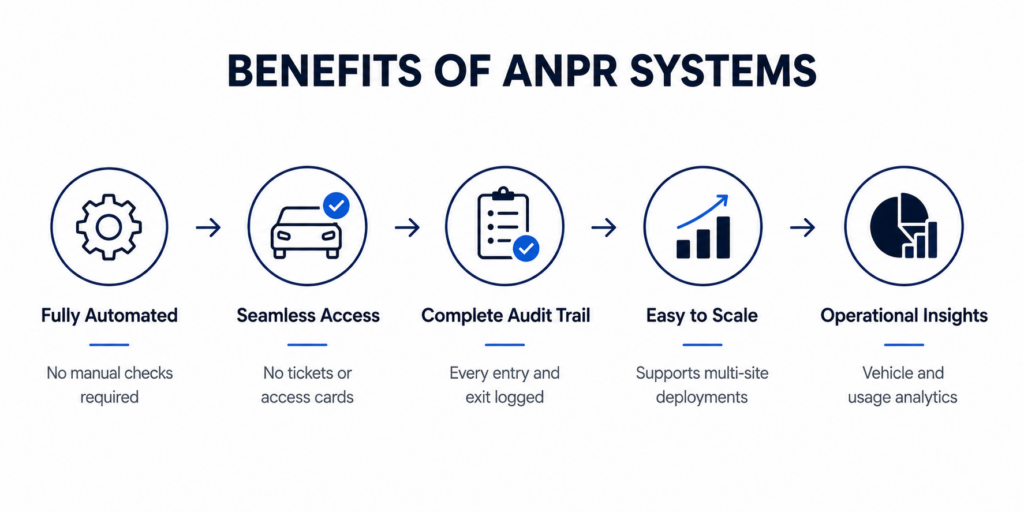
- Fully automated, no human intervention required: ANPR operates continuously without staff oversight. Plates are captured, read, matched, and acted upon automatically, 24 hours a day, freeing your team from manual checks, logbooks, and gatekeeping duties.
- Contactless and frictionless for users: There is nothing for drivers to collect, tap, or present. The vehicle is the credential. Entry and exit happen without stopping, which reduces queues and improves the experience for regular users in particular.
- A complete audit trail: Every vehicle movement is logged with a plate image and timestamp, supporting billing reconciliation, security investigations, and compliance audits without relying on manual documentation.
- Scalable across sites and use cases: A single ANPR platform can manage one access lane or a multi-site portfolio of car parks, with centralised reporting and remote management. As vehicle volumes grow, the system scales without proportionally increasing administrative overhead.
- Rich operational data: Beyond access control, ANPR systems generate data on dwell times, peak usage periods, turnover rates, and vehicle patterns, supporting smarter pricing, staffing decisions, and long-term facility planning.
How Does an ANPR System Work?
The process from plate capture to triggered action typically takes seconds. It follows a consistent sequence of steps.
1. Image Capture
As a vehicle enters the camera’s field of view, a specialised ANPR camera captures a high-resolution image of the vehicle’s front or rear plate. These cameras are built specifically for this task and use infrared (IR) illumination to produce clear, accurate images regardless of lighting conditions, whether that is bright daylight, a dimly lit car park, or night-time operation.
2. Plate Detection
The software locates and isolates the number plate within the captured image. This step filters out the rest of the vehicle and background, focusing processing power on the plate region. Modern systems use AI-based object detection models that handle varying plate positions, angles, and sizes with high reliability.
3. Character Segmentation and OCR
Once the plate is isolated, the system separates individual characters and applies Optical Character Recognition (OCR) to convert the visual data into readable text. Deep learning models have significantly improved this step, allowing systems to handle varied fonts, formats, and plate designs from different countries and regions with far greater accuracy than earlier rule-based approaches.
4. Data Matching
The extracted plate number is cross-referenced against a database in real time. Depending on the application, this could be a permit holder list, a blacklist of flagged vehicles, a pre-booking registry, or an active session log that tracks entry and exit times for billing purposes.
5. Action and Logging
Based on the database result, the system triggers the appropriate response. Authorised vehicles get an automatic barrier lift or gate open. Unrecognised plates may be directed to pay manually, flagged for enforcement, or denied access entirely. Every transaction is logged automatically, capturing the plate image alongside a precise date and time stamp, building a complete and searchable record of every vehicle that passes through.
What Triggers an ANPR Camera?
ANPR cameras can be triggered in different ways, depending on how your site operates. The three common options are:
- Continuous capture: Best for busy or open areas where vehicles can approach from different directions or at different speeds. The camera continuously monitors its view for number plates.
- Inductive loops: Best for controlled entry and exit lanes, such as car parks and gated facilities. A sensor in the road detects when a vehicle passes and triggers the camera to capture its plate.
- Video motion detection: Best when you want a flexible setup without installing physical sensors. The camera detects a moving vehicle within a defined area and captures its plate automatically.
- Laser or infrared triggers: Best when precise vehicle detection is needed at a specific point. A laser or infrared beam is interrupted when a vehicle passes through, triggering the camera to capture the plate.
- External I/O or GPIO triggers: Best when the ANPR camera needs to work with other equipment, such as radar sensors, push buttons, or barrier systems. An external signal tells the camera when to begin capturing.
The right trigger depends on your traffic flow, site layout, vehicle speed, and existing infrastructure. An experienced LPR system provider can help you choose the most suitable option for your site.
What Does an ANPR System Include?
An ANPR system is more than just a camera. Several components work together to identify vehicles, process data, and automate actions in real time:
- ANPR Cameras: Capture clear licence plate images using specialised optics and infrared illumination for reliable recognition day and night.
- Recognition Software: Uses AI and Optical Character Recognition (OCR) to convert licence plate images into readable text and vehicle data.
- Backend Management Platform: Provides a central dashboard for managing permit lists, blacklists, vehicle records, alerts, reports, and system activity.
- Access Control Hardware: Controls physical entry points such as boom barriers, gates, and doors based on licence plate verification results.
- Integration Layer: Connects the ANPR system with payment systems, parking management software, building management platforms, and other third-party applications to create a seamless workflow.
What Types of ANPR Cameras Are Available?
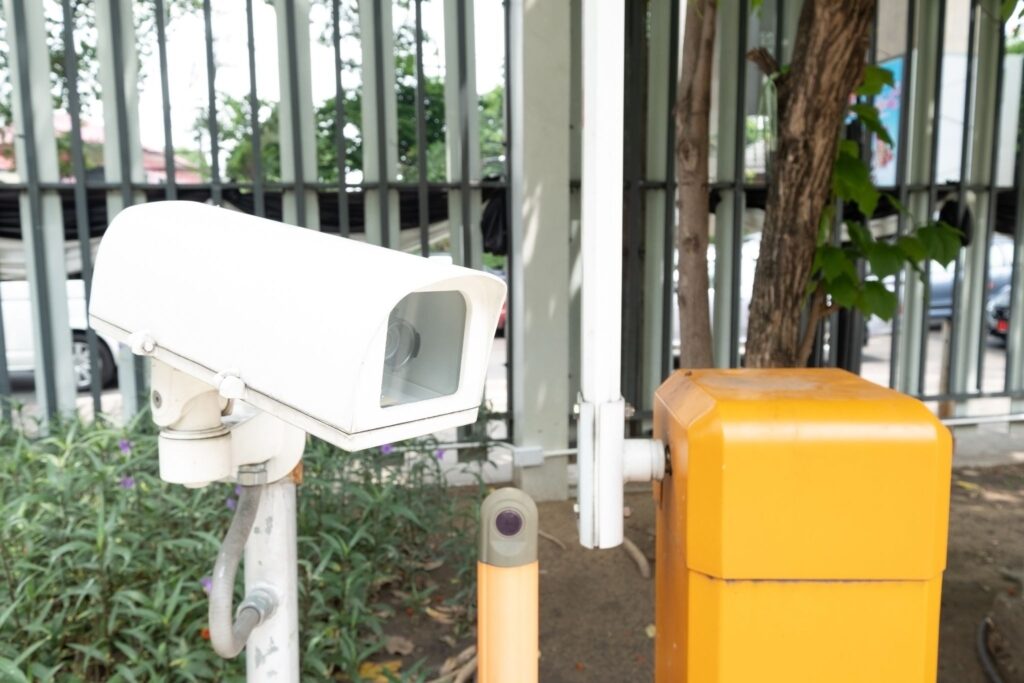
ANPR cameras come in different types, and the best choice depends on where and how they will be used. Vehicle speed, detection distance, lighting, lane width, and whether the camera is indoors or outdoors all influence the right setup.
- Fixed and long-range cameras: Fixed cameras are commonly used at car park entrances, exits, and gated facilities where vehicles pass through a defined point. Long-range models are better suited to highways, larger sites, or areas where vehicles need to be identified from further away or at higher speeds.
- Mobile ANPR units: Vehicle-mounted and trailer-mounted cameras offer more flexibility than permanent installations. They can be useful for temporary monitoring, enforcement, events, or locations where a fixed camera is not practical.
- Solar and 4G wireless cameras: These are useful for remote or temporary locations where running power and network cables would be difficult. Solar power and wireless connectivity allow ANPR to be deployed without extensive cabling.
- Edge-based vs server-based systems: With edge-based ANPR, the camera processes and recognises plates itself before sending the results to the system. Server-based ANPR sends the video to a central server for processing, making it more suitable when multiple cameras need to be managed from one location.
What Is an ANPR System Used For?
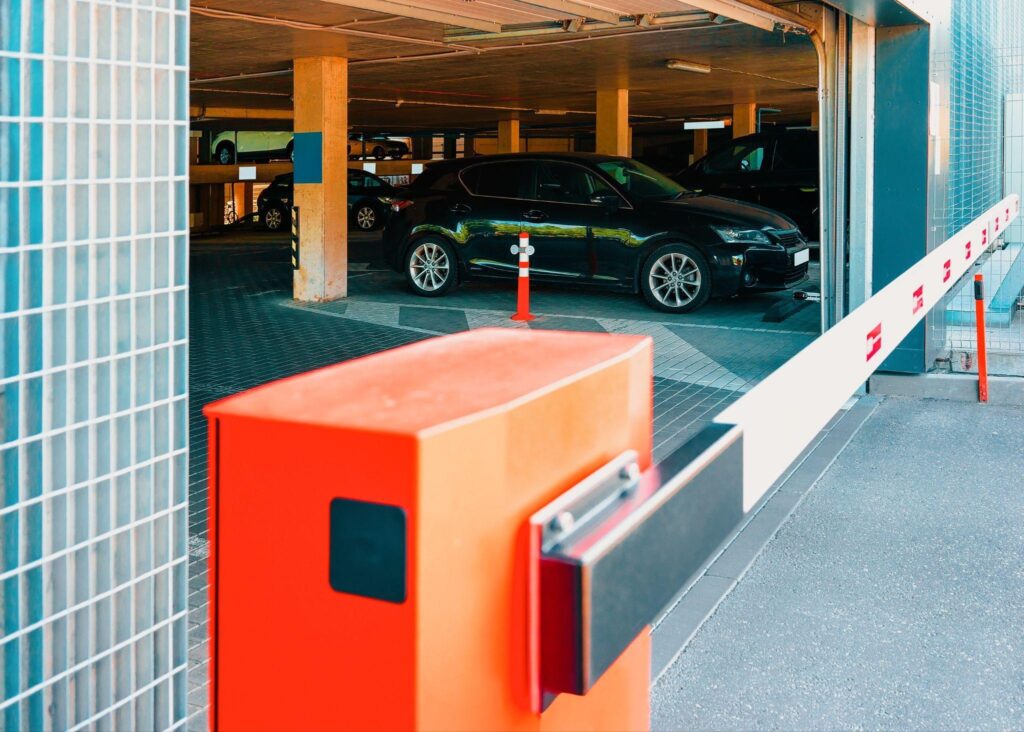
ANPR has expanded well beyond its law enforcement origins. Today, it serves a wide range of commercial, municipal, and security applications.
1. Parking Management
ANPR is the engine behind modern ticketless parking. The system logs vehicles on entry, calculates fees based on duration, and processes payment on exit, all without physical tickets or access cards.
For car park operators, this means lower overheads, fewer revenue gaps, and a noticeably better experience for drivers. Applications span commercial car parks, retail facilities, hospitals, residential buildings, and corporate campuses.
2. Vehicle Access Control
Gated facilities use ANPR to grant seamless access to authorised vehicles while keeping unauthorised ones out. Registered plates are pre-loaded into the system.
When a recognised plate appears, the barrier opens automatically. When an unregistered plate appears, the system denies access or triggers an alert. This is widely used in residential developments, office buildings, logistics sites, and industrial facilities.
3. Toll Collection and Road User Charging
ANPR enables free-flow tolling, where vehicles pass through at normal speed and are billed automatically based on plate identification. This eliminates toll booth queues and reduces infrastructure costs.
4. Law Enforcement and Security
Police forces use ANPR to identify stolen vehicles, flag uninsured or untaxed cars, track vehicles of interest, and support criminal investigations. Fixed cameras on motorways and mobile units on patrol vehicles scan plates continuously and cross-reference them against national databases in real time, generating alerts when a match is found.
5. Traffic Monitoring and Journey Time Analysis
Transport authorities use ANPR data to measure journey times between fixed points, monitor traffic flow, identify congestion patterns, and inform infrastructure planning. The system captures plate data at multiple locations and calculates travel times without storing personally identifiable information about the driver.
6. Border Control and Customs
Border agencies use ANPR to verify vehicles crossing checkpoints, maintain arrival and departure records, and flag vehicles of interest. The technology speeds up processing at high-volume crossings while maintaining a detailed and auditable log of all vehicle movements.
Does ANPR Work With Still Images or Video?
ANPR can work with both still images and video, depending on how the system is set up.
- Still images: The system captures a snapshot of the vehicle and uses recognition software to read the number plate. This works well at controlled entry points where vehicles are stationary or moving slowly.
- Video: The system analyses frames from a live or recorded video feed to identify plates on moving vehicles. This is useful for busy car parks, roads, toll points, and other areas where vehicles may not stop.
Can ANPR Be Fooled by a Printed Plate or Screen?
Like any camera-based technology, the level of protection depends on the ANPR system being used. Basic systems may be more easily fooled by an image of a number plate, particularly when they rely mainly on standard visible-light imaging.
- Printed plates: Basic camera systems may recognise a high-quality image of a number plate as a real plate, particularly if they rely only on standard visible-light imaging.
- Screens: A plate displayed on a phone, tablet, or monitor could also potentially be captured by a basic system.
How ANPR Systems Verify a Real Vehicle
Not every ANPR system has the same level of protection. The more security-sensitive the application, the more advanced the detection and verification methods tend to be.
| ANPR System Level | Vulnerability to Images/Video | Core Defence Mechanisms |
| Low-End | High | Little to no protection. Basic OCR may recognise any visible plate-like text as a valid vehicle. |
| Commercial Entry | Moderate | IR illumination, loop detectors, and other vehicle detection methods help confirm that a real vehicle is present before capture. |
| Law Enforcement / High-Security | Very Low | Advanced systems may combine IR imaging, multiple sensors, AI analysis, and vehicle data to provide stronger verification. |
Why This Matters for Businesses
Higher-quality ANPR cameras can use infrared (IR) illumination to distinguish genuine reflective number plates from images on paper or electronic screens. This can reduce false captures and give businesses greater confidence that the system is identifying a real vehicle.
For a typical commercial car park, the right level of protection may differ from what is required at a high-security facility. The key is choosing an ANPR setup that matches your site, traffic conditions, and security requirements.
How Is ANPR Data Stored?
ANPR systems can store more than just a number plate. A typical record may include the plate number, captured image, date and time, and details of the vehicle event.
Where the data is stored depends on the system:
- On-camera or on-site: Data can be processed and stored locally, which can work well for smaller or single-site setups.
- Centralised or cloud-based: Data can be managed through a central platform, making it easier for businesses with multiple sites to access records, manage vehicle lists, and generate reports from one place.
Data retention also matters: Businesses should know how long ANPR records are kept, who can access them, how they are protected, and when they are deleted. In Malaysia, these practices should also take applicable data protection and privacy requirements into account.
What Are the Latest 2026 Trends in ANPR Software?
- AI and deep learning
Modern ANPR software is becoming better at recognising plates in challenging conditions, including different plate formats, viewing angles, poor lighting, and moving vehicles.
For businesses, this means more reliable vehicle identification and fewer errors that could otherwise lead to access delays or manual intervention.
- Dual biometric verification
Some manufacturers are combining licence plate recognition with facial recognition and driver checks to verify both the vehicle and the person behind the wheel. For businesses managing high-security facilities, this can provide an additional layer of verification when knowing who is driving the vehicle matters as much as the vehicle itself.
- Contactless parking
ANPR is helping commercial car parks move away from paper tickets and manual entry systems by automatically recording when vehicles enter and exit. This can reduce queues, simplify parking operations, and make it easier to manage payments without requiring drivers to collect or return a physical ticket.
- Cloud-based deployment
Cloud-based ANPR platforms are becoming more common, allowing businesses to manage vehicle data, analytics, and multiple sites through a centralised system. This can make it easier to scale an ANPR solution as a business grows, while giving operators greater visibility without having to manage separate systems at every location.
What to Look for in an ANPR System
If you are evaluating ANPR systems for a facility, these are the factors that matter most:
- Accuracy rate under real-world conditions: Ask suppliers for performance data under low light, adverse weather, and high vehicle speeds, not just theoretical performance
- Integration capability: The system should connect cleanly with your existing barriers, payment hardware, and management software without requiring a complete infrastructure overhaul.
- Multi-format plate support: Particularly important for facilities in markets where foreign plates or multiple plate standards are common.
- Scalability: Whether you are managing a single lane or a multi-site portfolio, the platform should accommodate growth without significant rearchitecting.
- Local support and servicing: Uptime is critical for access control. Choose a supplier with on-the-ground technical support, not just remote assistance.
- Data management and compliance: Understand the system’s data retention policies and ensure they align with applicable local regulations.
Conclusion
ANPR technology has evolved far beyond its roots in law enforcement. Today, it plays a key role in parking management, access control, and security operations across commercial buildings, residential developments, industrial facilities, and other high-traffic environments.
To maximise the benefits of ANPR, choosing the right security system supplier is just as important as the technology itself. As an expert security system supplier in Malaysia, CMC Solutions provides end-to-end turnkey ANPR solutions, from consultation and system design to installation, integration, and support. Contact us today for a free consultation.
Frequently Asked Questions about What is an ANPR System
1. What does ANPR stand for?
ANPR stands for Automatic Number Plate Recognition. It is a technology that uses cameras and software to read vehicle number plates automatically, without any driver action or human oversight.
2. Is ANPR the same as LPR?
Yes. ANPR and LPR refer to the same technology. ANPR is the standard term in the UK, Europe, and Australia, while LPR (License Plate Recognition) is more common in North America. These terms are sometimes used interchangeably.
3. How accurate are ANPR systems?
Modern ANPR systems achieve recognition accuracy between 90% and 99%, depending on image quality, lighting conditions, vehicle speed, and plate condition. AI-powered systems incorporating low-light enhancement and advanced OCR algorithms consistently perform at the higher end of that range.
4. Where is ANPR technology used?
ANPR is used across a wide range of applications, including car park management, vehicle access control, toll collection, law enforcement, traffic monitoring, border control, and logistics. Any environment that requires automated vehicle identification can benefit from the technology.
5. Can ANPR work without a barrier gate?
Yes. ANPR can operate in open or barrier-free environments where it logs plates for enforcement, billing, or monitoring purposes without controlling a physical gate. This is common in surface car parks, on-street enforcement, and traffic monitoring applications.
6. How is ANPR different from CCTV?
Standard CCTV systems capture video footage for passive monitoring and retrospective review. ANPR goes further by actively reading and processing number plate data in real time, triggering automated actions and building a searchable, structured record of vehicle movements. The two systems are often used together, with ANPR providing the intelligence layer on top of standard camera infrastructure.