
Introduction
Facial recognition has become the backbone of modern access control, granting entry to offices, restricted areas, and secured facilities without a badge or key card. But that’s just the start. Once extraordinary, it has quietly become part of everyday life.
As facial recognition becomes a standard feature in door access systems, workforce management, and customer verification, the business case for understanding it properly has never been stronger. This guide covers how it works, where it is used, and what organisations should consider when evaluating it as a security solution.
What Is Facial Recognition?
Facial recognition is a biometric technology that identifies or verifies a person based on their facial features. Instead of relying on something a person knows, such as a password, or something they carry, such as an access card, it uses physical characteristics that are unique to the individual.
As it only requires a camera and minimal user interaction, facial recognition offers a fast and convenient method of authentication. This ease of use has contributed to its growing adoption across smartphones, access control systems, attendance tracking, and identity verification applications.
How Does Facial Recognition Work? (Step by Step)
Facial recognition systems analyse and compare facial features to determine whether a person matches a stored identity. While the process takes place in seconds, it typically involves four key stages working together:
1. Image capture
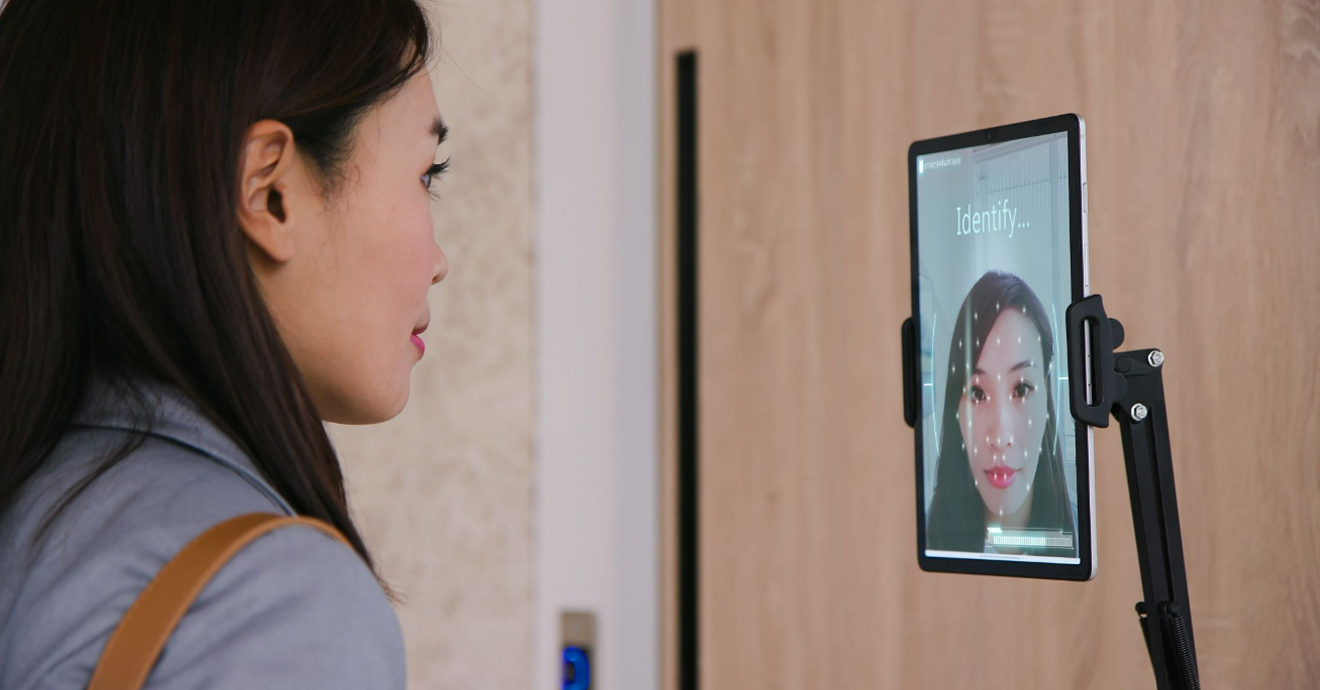
The process begins with a camera capturing an image or video frame of a person’s face, whether through a security camera, a smartphone lens, or an access control scanner. A clear, well-lit view is needed to proceed, which is why many systems use infrared or supplementary lighting to maintain accuracy in low light.
2. Face Detection
The system first identifies and isolates a face within an image or video feed. Detection algorithms look for patterns and proportions associated with human facial structures, allowing the system to focus only on the face rather than the surrounding environment.
3. Feature Extraction
Once a face is detected, the system maps key facial features such as the eyes, nose, mouth, and jawline. These measurements are then converted into a unique digital template, sometimes referred to as a facial signature.
4. Template Comparison
The system compares the captured facial template with templates stored in its database. It evaluates multiple characteristics to determine how closely the faces correspond:
- Facial Proportions – Examines the relative arrangement and proportions of key facial landmarks.
- Feature Geometry – Analyses the shape and contours of features such as the eyes, nose, lips, and jawline.
- Surface Details – Considers finer characteristics such as skin texture and facial lines.
- Overall Facial Pattern – Evaluates the combination of these features to determine how closely the captured face resembles a stored template.
The system then generates a similarity score based on the degree of correspondence between the facial templates.
5. Identification or Verification Decision
If the similarity score meets the required threshold, the system confirms a match. Depending on the application, it may either identify a person by searching an entire database or verify a claimed identity by comparing the face against a specific stored record.
Common Use Cases of Facial Recognition
Facial recognition is now deployed across a wide range of industries and environments:
1. Access Control Systems
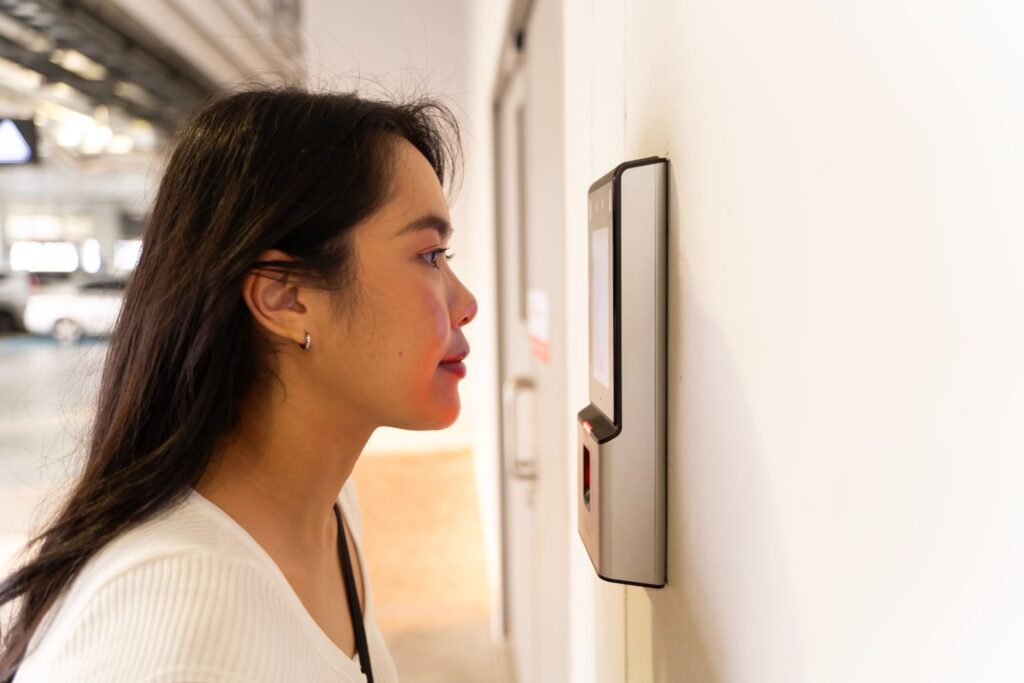
One of the most widespread physical security applications is facial recognition for access control. Organisations use it to restrict entry to secure facilities, replacing or supplementing traditional methods like keycards and PIN codes.
As a face cannot be “forgotten”, lost, or shared, it provides a more reliable credential. Modern facial recognition access control systems can also log entry and exit events automatically, supporting audit trails without any additional interaction from the user.
When paired with physical barriers such as turnstiles or automatic gates, these systems can also control who enters and exits a premises while creating a clear record of access times. This makes facial recognition a form of physical access control. To learn more about the different types of access control and how they work, see our guide to the different types of access control systems.
2. Attendance Tracking
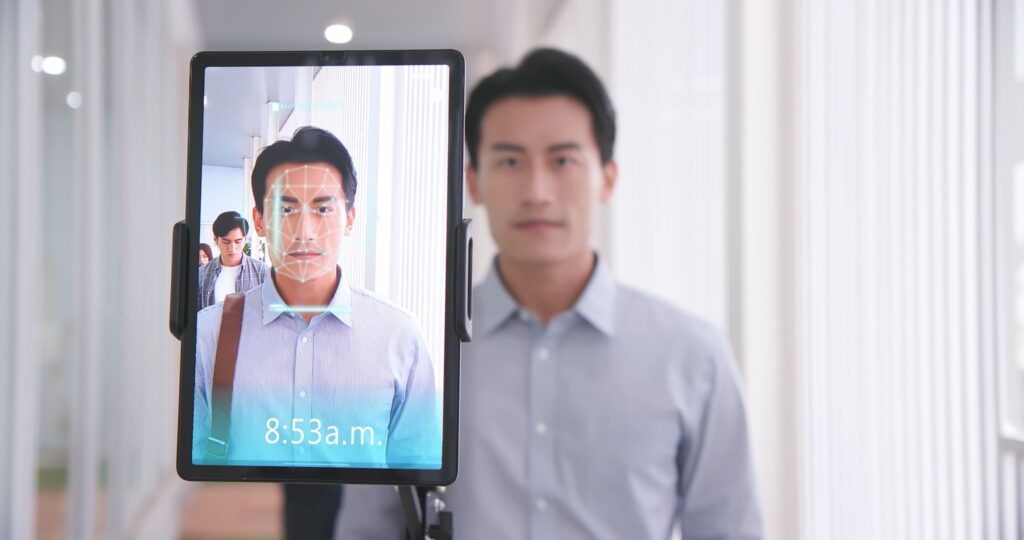
Some schools and workplaces use facial recognition to automate attendance, reducing the administrative overhead of manual checks.
When paired with access barriers, employees or students can simply scan their faces to enter, making it easier to record who enters and exits a premises and at what time. This can reduce the need for manual attendance checks while providing organisations with a more accurate record of attendance and movement.
3. Healthcare
Hospitals use facial recognition to restrict access to sensitive areas like pharmacies and operating theatres, and some hospitals are trialling it to flag unusual activity in high-risk wards, all without adding extra steps for medical staff who are already busy enough.
4. Border Control and Travel
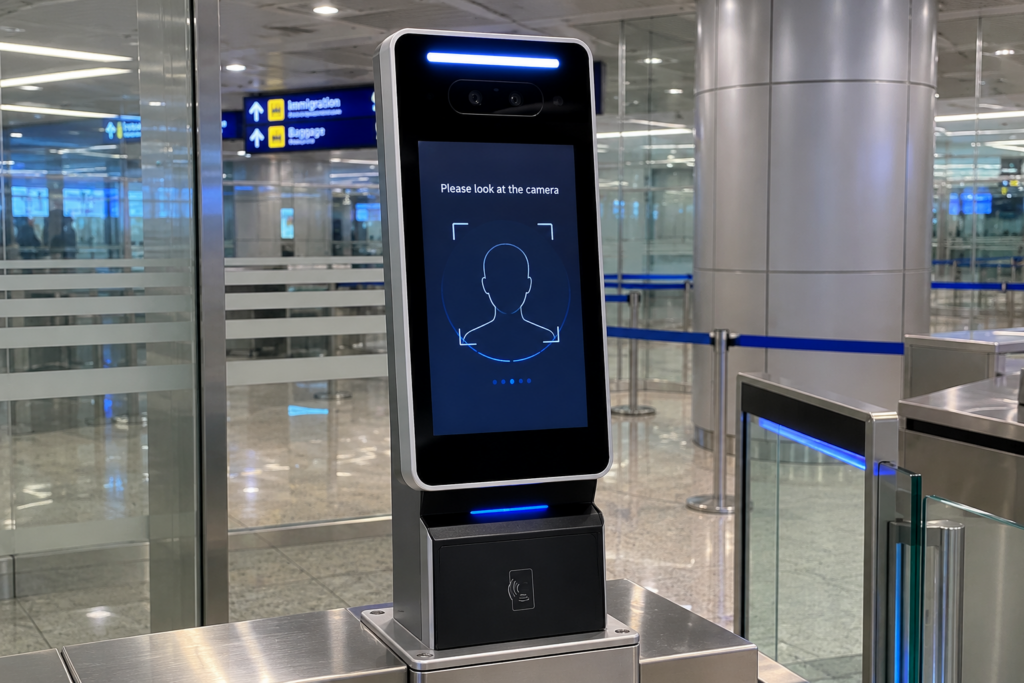
Facial recognition is increasingly used at border checkpoints and airports to verify traveller identities, speed up processing, and strengthen security.
In Malaysia, the government plans to deploy automated immigration gates and biometric verification at 125 entry points by 2028, expanding the use of facial recognition technologies to reduce reliance on manual inspections while improving border security.
By automating identity checks, travellers can move through immigration more efficiently while authorities can identify potential mismatches or suspicious activity more quickly.
5. Banking and Financial Services
Remote identity verification for account opening, loan applications, and high-value transactions increasingly relies on facial biometrics. The system matches a live selfie against a government-issued ID document photo, confirming the applicant is who they claim to be.
Many systems also use liveness detection to check that the biometric sample comes from a real person rather than a photograph, video, or other spoofing attempt. This adds another layer of security to remote transactions where the customer is not physically present.
6. Law Enforcement
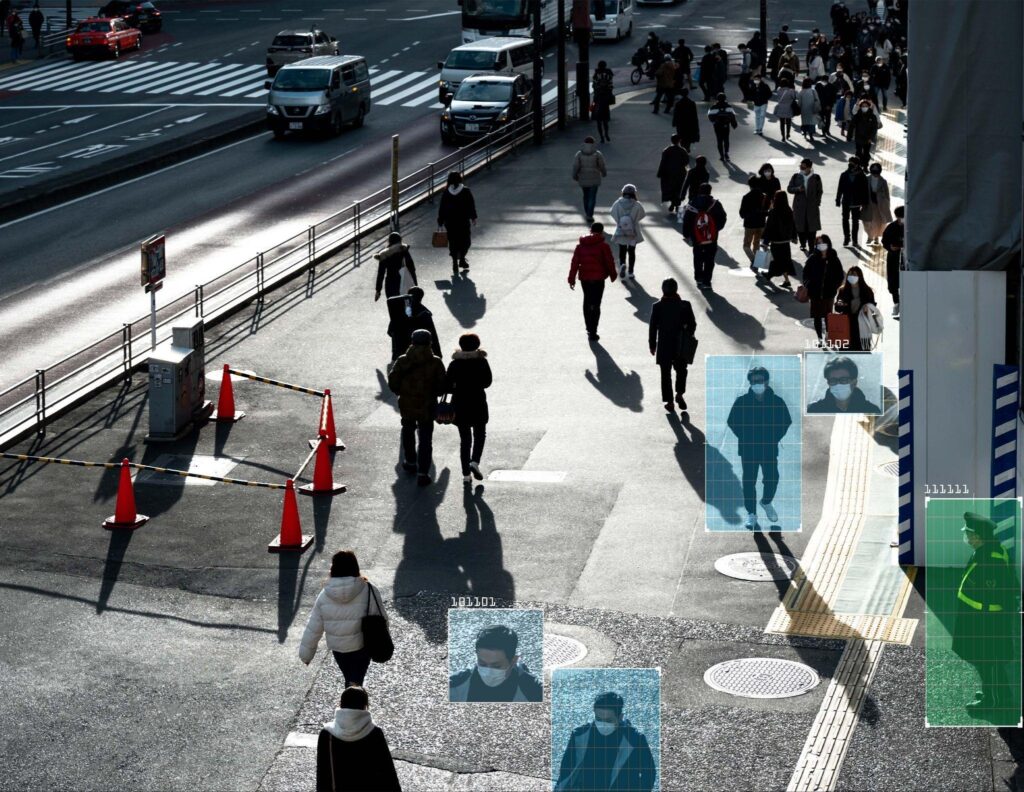
Police agencies use facial recognition to identify suspects from CCTV footage, cross-reference mugshot databases, and assist with missing person cases. In public spaces, facial recognition can be used alongside CCTV systems to help authorities identify individuals of interest and investigate incidents more efficiently.
However, its use in public spaces also raises concerns around privacy, consent, and the accuracy of identification, making responsible deployment and appropriate safeguards particularly important.
7. Retail
Retailers can use facial recognition to strengthen security and reduce losses. For example, some stores may use the technology to identify known shoplifters or monitor repeat offenders, while self-service stores can use facial recognition to verify customers as they enter.
When integrated with CCTV and other security systems, facial recognition can help retailers detect suspicious activity more quickly and provide security teams with additional information when investigating incidents.
8. Smartphone Unlocking
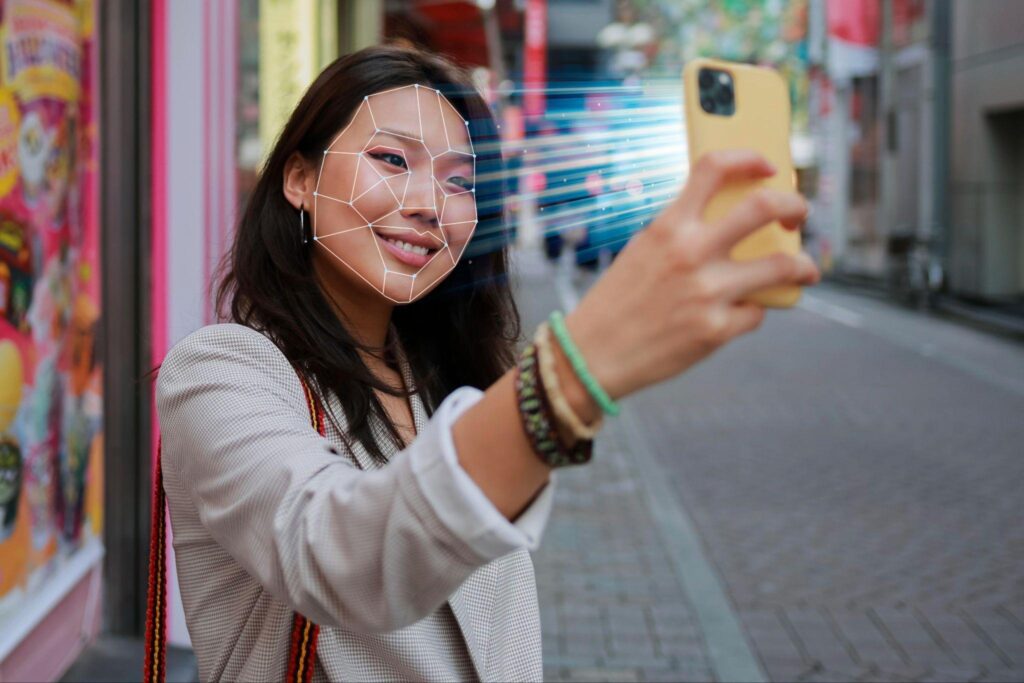
Consumer devices were among the first to normalise facial recognition at scale. Apple’s Face ID, introduced in 2017, brought 3D facial scanning to a mass audience.
Beyond making phone unlocking more convenient, facial recognition adds another layer of protection for sensitive information. Even if a smartphone is lost or stolen, biometric authentication can help prevent unauthorised users from accessing personal data, apps, and accounts. This is especially important today, as smartphones often contain banking apps, work information, private messages, and other sensitive data.
Types of Facial Recognition Algorithms
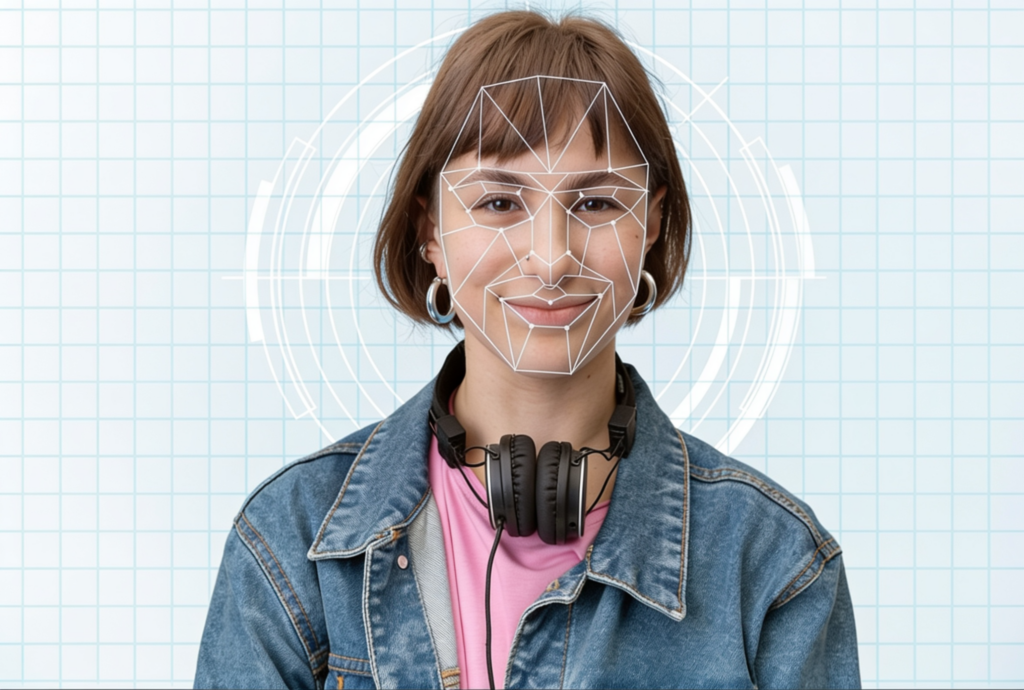
Modern facial recognition systems can be categorised in two ways: how they analyse a face and how they capture facial data.
By Analysis Method
1. Feature-Based Algorithms
Feature-based algorithms identify and compare specific facial characteristics, including:
- Distance between the eyes
- Nose shape and position
- Mouth location
- Facial contours and landmarks
Advantages:
- Can perform well with lower-quality images
- Less affected by partial facial obstruction
- Useful when lighting conditions are inconsistent
Disadvantages:
- Highly sensitive to changes in angles
- Struggles with expressions
- Lower overall precision
2. Holistic Algorithms
Holistic algorithms analyse the face as a complete image rather than focusing on individual features.
Advantages:
- Better at handling changes in facial expression
- Effective under controlled imaging conditions
- Generally achieves higher recognition accuracy
Disadvantages:
- Extremely sensitive to lighting changes
- Easily confused by head rotation
- High computing requirements
Today, commercial systems rarely choose one approach over the other. Instead, they use deep learning hybrids. By combining whole-face analysis with the detection of thousands of unique facial characteristics, these systems deliver greater accuracy, resilience, and real-world performance.
By Data Capture Method
1. 2D Facial Recognition
2D systems use standard cameras to capture a flat facial image and compare it against stored records.
Advantages:
- Lower implementation cost
- Works with conventional cameras
- Common in smartphones, attendance systems, and basic access control
Disadvantages:
- More sensitive to lighting and viewing angles
- More vulnerable to spoofing using photographs
2. 3D Facial Recognition
3D systems use depth-sensing technology to create a three-dimensional facial model.
Advantages:
- Higher accuracy across different angles
- Better performance in varying lighting conditions
- Greater resistance to spoofing attempts
Disadvantages:
- Higher hardware and deployment costs
- Increased processing requirements
Advantages of Facial Recognition
- Speed and convenience
Facial recognition authentication can be completed in under a second. There is nothing to carry, type, or remember. This significantly reduces friction in both consumer and enterprise settings.
- Passive operation
Unlike fingerprint or iris scanning, facial recognition requires no deliberate action from the user. The face can be scanned while a person is simply walking toward a camera.
- Non-contact
No physical touch is required, making it ideal for busy environments and situations where hygiene is important.
- Difficult to share or transfer
A face, unlike a password or access card, cannot easily be handed to someone else, reducing the risk of credential sharing.
- Scalability
Modern systems can run accurate matches against databases containing millions of templates in real time, making them viable for large-scale deployments such as airports or national ID programmes.
- Integration with other technologies
Facial recognition rarely operates in isolation. It can be layered into existing building security infrastructure, such as door access systems, visitor management software, and CCTV networks, allowing organisations to build a more connected and automated security setup rather than relying on standalone tools.
What to Consider Before Adopting Facial Recognition
While facial recognition offers significant benefits, it also raises important privacy, ethical, and operational considerations that organisations should carefully evaluate before implementation:
- Accuracy Can Vary Across Different Groups
Facial recognition systems do not always perform equally for everyone. Research has shown that some algorithms may have higher error rates when identifying certain demographic groups, such as children, older individuals, and people with darker skin tones.
- Privacy and Consent Concerns
Because facial recognition can identify people from a distance without physical interaction, individuals may be recognised without their knowledge or consent. This raises concerns about privacy, particularly in public surveillance applications.
- Vulnerability to Spoofing Attacks
Some facial recognition systems can be tricked using photographs, videos, or other forms of impersonation, although features such as liveness detection and 3D facial recognition help reduce this risk.
- Biometric Data Cannot Be Replaced
Unlike passwords, biometric data cannot be easily changed if it is compromised. This makes secure storage, encryption, and responsible data management especially important when implementing facial recognition systems.
- False Matches and Failed Recognition
No facial recognition system is 100% accurate.
- False positives occur when the system incorrectly identifies someone and grants access.
- False negatives occur when the system fails to recognise an authorised user and denies access.
- Evolving Regulatory Requirements
Regulations surrounding facial recognition continue to evolve, making it important for organisations to stay up to date with applicable privacy and data protection requirements.
Trends in Facial Recognition
Several developments are actively shaping where the technology goes next.
- Multimodal Biometrics: Facial recognition is increasingly being combined with other biometric methods such as iris scanning, voice recognition, and behavioural analysis to improve accuracy and strengthen security.
- Liveness Detection and Anti-Spoofing: Systems are becoming better at distinguishing real people from photographs, videos, masks, and other spoofing attempts, helping improve security and authentication accuracy.
- Deepfake Detection: As AI-generated faces and manipulated videos become more common, facial recognition vendors are developing tools that can identify synthetic or altered content during identity verification.
- On-Device Processing: More facial recognition systems are processing biometric data directly on the device rather than sending it to external servers, improving privacy, reducing latency, and enhancing reliability.
- Evolving Regulations: Governments and regulatory bodies continue to introduce new rules surrounding biometric data, privacy, and surveillance, encouraging greater transparency and accountability in facial recognition deployments.
- AI-Enhanced Accuracy and Low-Light Performance: Modern AI models can better handle shadows, glare, poor lighting, and facial movement, enabling more reliable identification in challenging real-world environments.
Conclusion
Facial recognition offers a powerful combination of convenience, speed, and security, making it an increasingly popular choice for access control and identity verification. Understanding how the technology works, along with its strengths and limitations, is essential to determining whether it is the right fit for your organisation.
As a building security company in Malaysia, CMC Solutions provides door access systems with facial recognition capabilities for modern workplaces and facilities. Reach out to our experts to discuss a solution tailored to your security requirements.
Frequently Asked Questions on Facial Recognition Systems
1. What underlying technologies make facial recognition possible?
Facial recognition combines computer vision, artificial intelligence, and machine learning to detect, analyse, and compare faces. Advanced systems may also use infrared sensors, depth mapping, and liveness detection to improve accuracy and security.
2. How does a facial recognition system process a similarity score, and what is a comparison threshold?
When a person is scanned, the system compares their facial data with the records stored in its database. It then calculates a similarity score, which indicates how closely the scanned face matches a stored profile. The system also uses a comparison threshold, which is the minimum score required for a match to be accepted.
- If the similarity score is above the threshold, the system confirms a match.
- If the similarity score is below the threshold, the match is rejected.
A higher threshold increases security by requiring a closer match, while a lower threshold makes recognition more lenient.
3. What is the difference between facial recognition and facial characterisation?
Facial recognition is used to identify or verify a person’s identity by matching their face against known records. Facial characterisation, on the other hand, analyses facial attributes such as estimated age, gender, or emotional expression without identifying the individual.
4. How accurate is facial recognition today?
Modern facial recognition systems can achieve accuracy rates above 99% under controlled conditions. However, real-world performance can vary depending on factors such as lighting, camera angle, image quality, facial obstructions, and environmental conditions.
5. Can facial recognition still work when a person is wearing a mask?
Masks can reduce accuracy because they cover key facial features used for matching. To address this, some modern systems use algorithms that focus on the eye region and upper face, allowing recognition performance to remain effective even when part of the face is obscured.
6. Can photographs be used to bypass facial recognition systems?
Basic 2D systems may be vulnerable to photo-based spoofing attempts, particularly if they lack additional security measures. Modern facial recognition systems often incorporate liveness detection and depth sensing technologies to verify that a real person is present rather than a photograph or video.
7. What other biometric access control systems exist besides facial recognition?
Common alternatives include fingerprint recognition, iris recognition, palm vein recognition, and voice recognition. Some organisations combine multiple biometric methods alongside facial recognition for stronger security.